
I love chasing the roar of jet engines from prime vantage points. A good spotting telescope changes everything for plane spotters like me. It pulls in distant tails, liveries, and registration numbers that binoculars just can’t match.
You’ve felt that frustration at the fence line, squinting at a 737 two miles out. I have too. That’s why I scour the latest optics for tools that deliver sharp views during takeoff rushes. In this post, I share picks, features, and tips tailored for aviation fans. Let’s zoom in on what works best.
Last verified August 2026.
Choosing the Right Spotting Telescope
I start trips by matching the scope to my spot. Straight eyepieces suit quick scans from standing positions at perimeter fences. Angled ones feel better for long sessions seated on hillsides.
Distance matters most for me. Airports like LAX or Heathrow demand 50x plus magnification to read n-numbers on finals. I pair that with big objective lenses, 80mm or more, to grab light through haze.
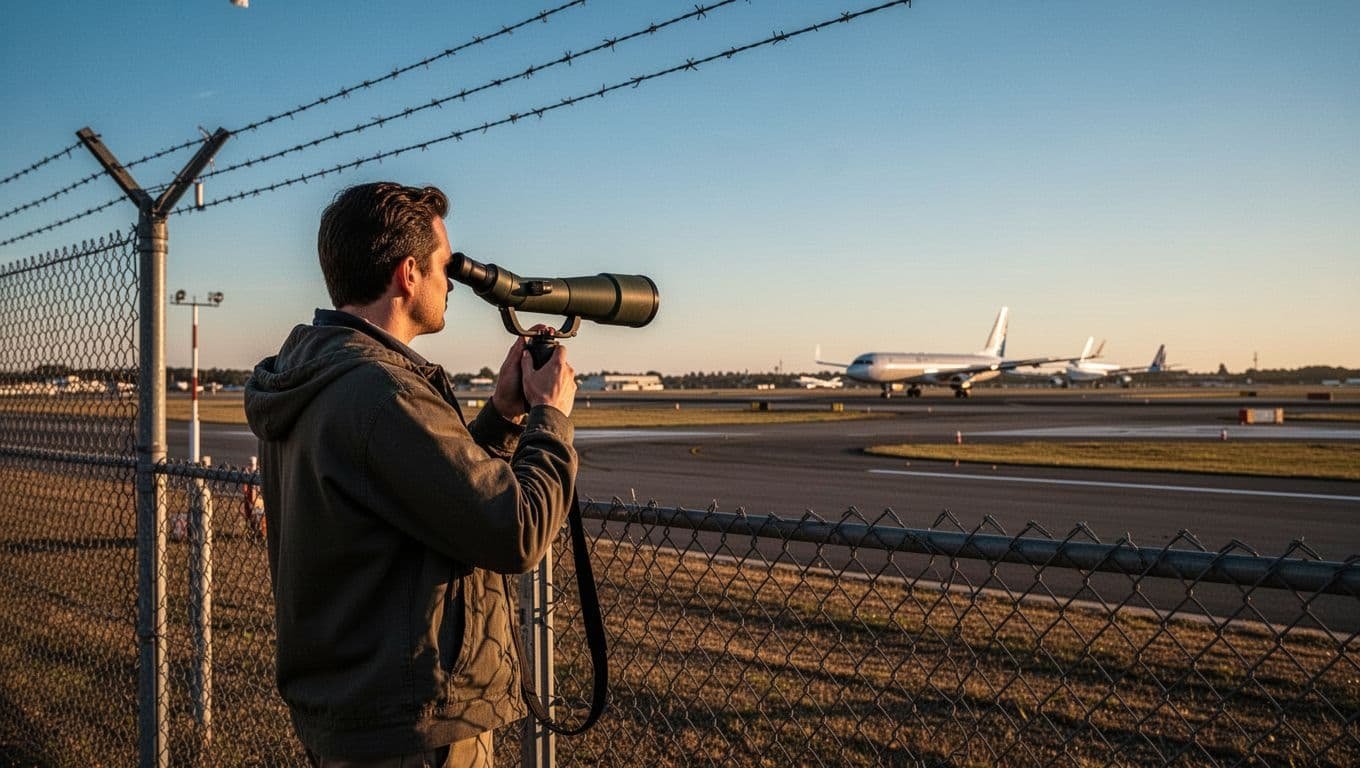
Budget plays a role, so I balance cost with clarity. Entry-level models around $200 handle casual days. Premium ones top $1,500 for edge-to-edge sharpness. I test them on real runways, not just specs.
For plane spotting, I skip astronomy-focused scopes. Those prioritize stars over daytime heat shimmer. Instead, I grab digiscoping-ready ones if I shoot photos too.
Spotting telescope or spotting scope — is there a difference?
In practice, “spotting telescope” and “spotting scope” describe the same category of daytime optic, and I use the terms interchangeably in my own kit bag. Where it gets confusing is when a genuine astronomical telescope, like a small Maksutov-Cassegrain, gets marketed for “spotting” use. Those can work for daytime viewing, but they’re optimized for low-light celestial targets, often have narrower fields of view, and rarely come with the waterproofing or rubber armor that survives a day at an open-air fence line. I stick to purpose-built spotting scopes for anything I plan to use regularly at an airport.
Key Features to Look For
Optics define my best days. Extra-low dispersion glass cuts color fringing on silver fuselages. Fully multi-coated lenses boost light transmission, so I see panels clearly at dusk.
Waterproofing keeps me out in rain. Fogproofing stops condensation during humid mornings. I demand rubber armor for drops on gravel.
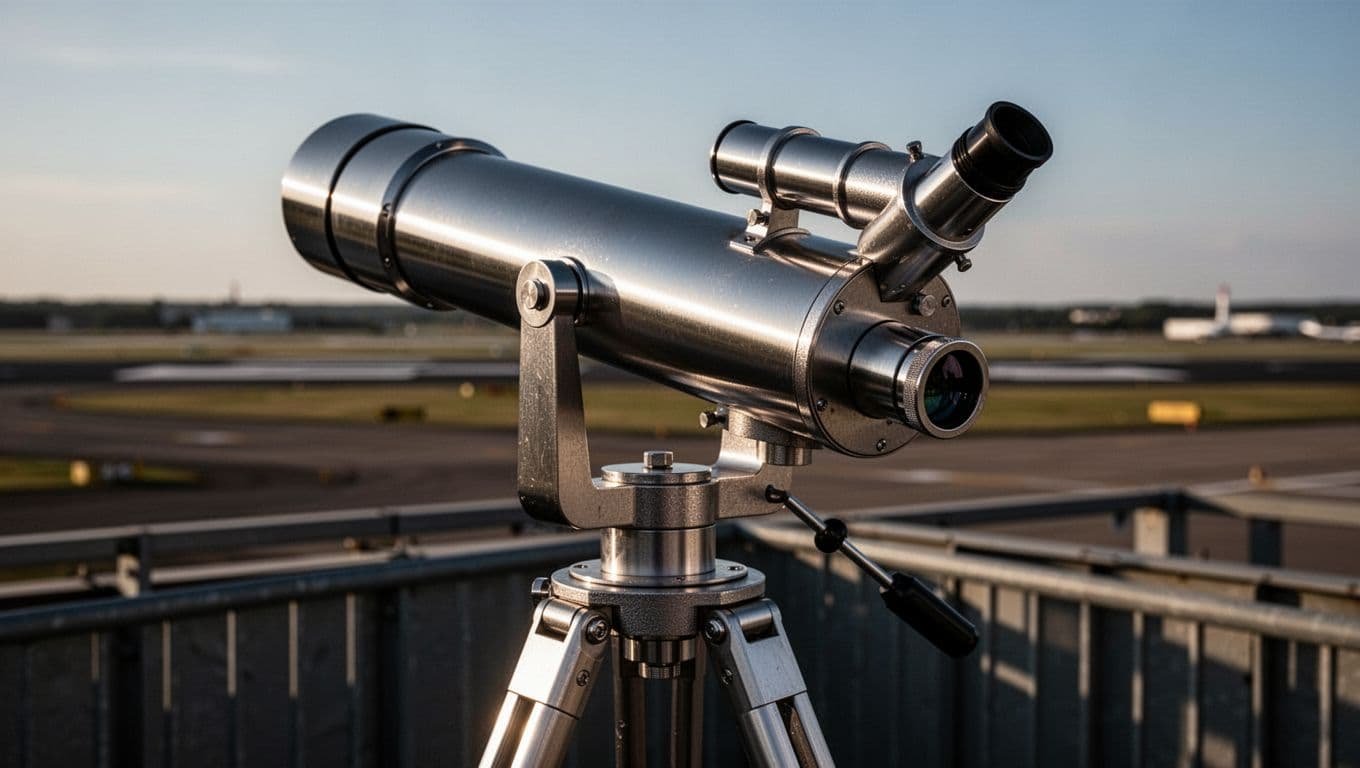
Zoom range hits 20-60x for versatility. Low end tracks taxiing heavies. High end dissects high-altitude climbers. Smooth focus wheels prevent shakes.
Tripod mounts stay standard. I add fluid heads for panning departures. Weight under 5 pounds means easy hikes to remote spots.
Why I now check the close-focus distance before anything else
Most buying guides lead with magnification and objective size, but the spec I actually check first these days is minimum close-focus distance. Plenty of spotting telescopes are optimized for distance and simply won’t focus sharply on anything inside 20 or 25 feet. That’s fine at a big international hub where the nearest taxiway sits hundreds of yards off, but it’s a real problem at smaller regional fields or GA airports where aircraft can pass within touching distance of the fence. I learned this the hard way trying to photograph a visiting warbird that taxied close enough to fill the frame — my scope simply couldn’t lock focus on it.
| Model | Zoom/Magnification | Objective Lens | Key Strengths | Price Range (2026) |
|---|---|---|---|---|
| Vortex Razor HD | 27-60x | 85mm | Waterproof, sharp in low light | $1,200-$1,600 |
| Swarovski ATS 80 | 20-60x | 80mm | Premium clarity, durable | $3,000+ |
| Celestron C5 | High power | 127mm | Powerful for distant details | $800-$1,000 |
| Celestron Regal M2 | 20-60x | 65mm | Lightweight, ED glass | $500-$700 |
| Barska Blackhawk | 20-60x | 60mm | Budget-friendly, solid zoom | $150-$250 |
This table sums my favorites from recent tests. Vortex leads for value. Bigger lenses win in dim conditions.
Top Models I Recommend for 2026
I rate the best spotting scopes in 2026 by runway performance. Vortex Razor HD tops my list. Its 85mm lens pulls in A380 details from 2km. Rubber grips hold steady in wind.
Swarovski ATS shines for pros. I love its angled view during all-day vigils. Colors pop on rare visitors like Antonovs.
Celestron C5 surprises with telescope power. I use it for night freight ops. Regal M2 suits beginners on tight budgets. Barska gets me started without breaking the bank.
Accessories seal deals. I buy window mounts for cars and padded cases for travel. Prices hold steady this year, per latest checks.
The Celestron C5 deserves a closer look
Of everything on my list, the Celestron C5 is the odd one out — it’s a genuine catadioptric telescope rather than a purpose-built spotting scope, and I include it because that design gives it real advantages for a specific kind of spotting. The 127mm aperture pulls in far more light than any of the dedicated spotting scopes here, which makes it noticeably better for dusk and night freight operations where the others start to struggle. The trade-off is a narrower field of view and a longer, heavier body that’s less practical for casual carrying. I keep mine mounted at a fixed hotel or hillside position rather than hauling it between spots.
Using Spotting Telescopes from Plane Spotter Hotels
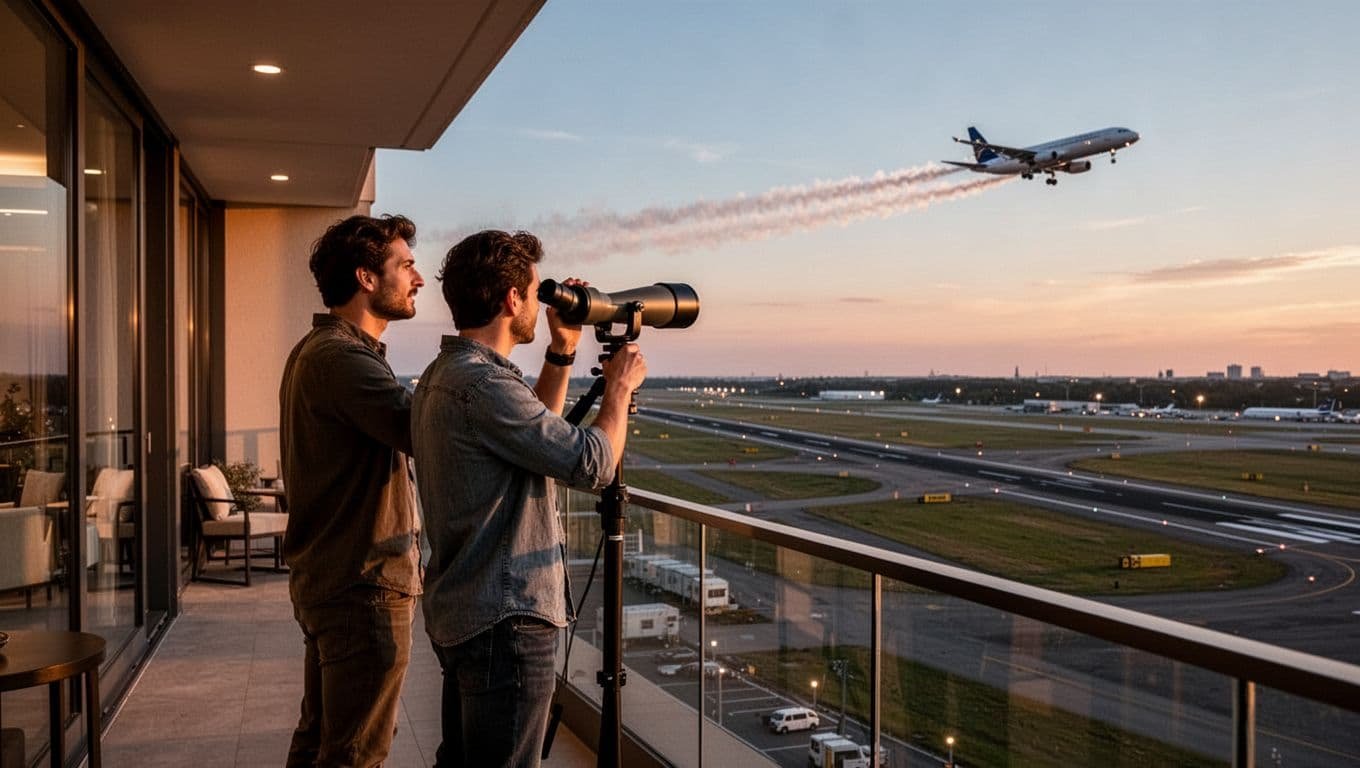
Hotel balconies beat fences sometimes. I book plane spotter hotels with direct runway sightlines. Scopes amplify those views, turning rooms into control towers.
Setup stays simple. Tripods clamp to rails. Angled eyepieces match seated comfort with coffee in hand.
I spot from places like the Hilton at MIA. Telescopes reveal cockpit crews during pushbacks. No trekking needed. Pair with apps for schedules, and I log rarities from bed.
Common Mistakes I Avoid
Shaky tripods blur everything. I invest in heavy-duty ones first. Over-magnification shakes views too. Stick to 40x max in heat.
Skipping lens caps invites scratches. I clean with microfiber only. Cheap scopes disappoint with fuzzy edges. Test in stores if possible.
Forget weight on long walks. Light models under 3 pounds save backs.
A note on heat shimmer that most guides skip
Heat shimmer is the single biggest image killer I deal with, and no amount of glass quality fixes it — it’s a physical distortion of the air itself, caused by hot tarmac radiating heat upward across the sightline. It’s worst at midday in summer and gets progressively better toward dawn and dusk, which is one more reason my most productive sessions tend to be early morning. When I can’t avoid shooting through shimmer, backing off to 30-35x rather than pushing to max zoom actually produces a sharper-looking image, since lower magnification doesn’t amplify the distortion as much.
Caring for a Spotting Telescope Long-Term
A good telescope should last a decade or more if I look after it properly, so I treat maintenance as part of the hobby rather than an afterthought. After every outdoor session I do a quick visual check for dust on the objective lens and blow it off with a rocket blower before it has a chance to get ground in by the next wipe-down. I only use a proper lens cloth or lens pen for actual smudges, never a shirt sleeve or paper towel, both of which carry enough grit to leave fine scratches over time.
Storage matters just as much as cleaning. I keep my scope in a padded case with silica gel packets rather than leaving it in a hot car boot between sessions — heat cycling and humidity are two of the fastest ways to degrade internal coatings and invite fungus growth inside the barrel, which is a repair few people budget for. Once a year I also check that the tripod’s leg locks and pan head haven’t developed play, since a scope that’s rock steady on day one can develop a subtle wobble after a season of travel that’s easy to miss until I compare a photo against an older, sharper one.
Wrapping Up My Picks
Strong optics and steady mounts make spotting telescopes essential for me. Vortex Razor delivers the sharpest plane details without fuss. Book a plane spotter hotel, grab one, and watch the skies come alive.
What’s your go-to scope? Share in the comments. I plan more gear tests soon.
FAQ
What’s the best magnification for plane spotting?
I find 20-60x ideal. It tracks jets without excessive shake.
Do I need a tripod for a spotting telescope?
Yes, always. Handheld wobbles kill details at high power.
Are angled or straight spotting telescopes better?
Angled for comfort on long watches. Straight for fast target grabs.
How much should I spend on a spotting telescope?
$500 gets quality. $1,200 unlocks top performance.
Can spotting telescopes work from hotel rooms?
Absolutely. They excel with clear runway views from balconies.
Is a bigger objective lens always better?
Not necessarily. A bigger lens gathers more light and helps in low conditions, but it also adds weight and bulk. If I’m carrying gear a distance to reach a spot, I’ll trade some light-gathering power for something I can actually manage comfortably for a full session.