
Spotting scopes change how I watch planes take off and land. These powerful tools bring distant aircraft into sharp focus, so I spot every detail from tail numbers to engine markings. As a plane spotter, I rely on them during long sessions at airports or from my favorite vantage points.
You might wonder if a pair of binoculars suffices. They work fine for close-ups, but spotting scopes offer higher magnification and stability for far-off runways. I share my picks and tips here, tailored for aviation fans who chase the perfect view.
Last verified August 2026.
Why Spotting Scopes Beat Binoculars for Plane Watching
I grab spotting scopes when binoculars fall short. Planes often taxi or climb miles away, and scopes magnify up to 60x or more. That lets me read registrations on high-flyers that binoculars blur.
Stability matters too. I mount scopes on tripods, which cuts shake from hand-holding. In contrast, binoculars tire my arms after hours. Scopes also pair well with digiscoping adapters for photos through the eyepiece.
For plane spotters, straight-eye designs suit quick scans of busy skies. Angled ones ease neck strain during seated vigils. I pick based on my spotting style, whether at fences or decks.
How I actually use a scope on a spotting trip
Most of my sessions start the same way: I find a spot with a clean sightline to the threshold, set the tripod low enough to avoid catching wind, and pre-focus on a fixed point like an approach light so I’m not hunting for focus when a jet appears. Scopes reward patience more than binoculars do — the narrower field of view means I have to know roughly where the next arrival will appear rather than sweeping the sky and hoping to catch it.
I’ve learned to keep both eyes open when I’m not looking through the eyepiece, so I can track an aircraft with my naked eye first and then swing the scope onto it once it’s close enough to be worth the extra magnification. That habit alone has saved me from missing several rare visitors that would have been gone by the time I found them through 45x zoom.
How to Choose the Right Spotting Scope
I start with magnification and objective lens size. A 20-60x zoom on an 80mm lens balances power and brightness. Too much zoom darkens the view in low light, like dawn patrols.
Next, I check build quality. Waterproof, fog-proof models survive rain-swept tarmacs. Magnesium alloy bodies stay light yet tough for travel. Eyecups block glare, and smooth focus knobs track fast jets.
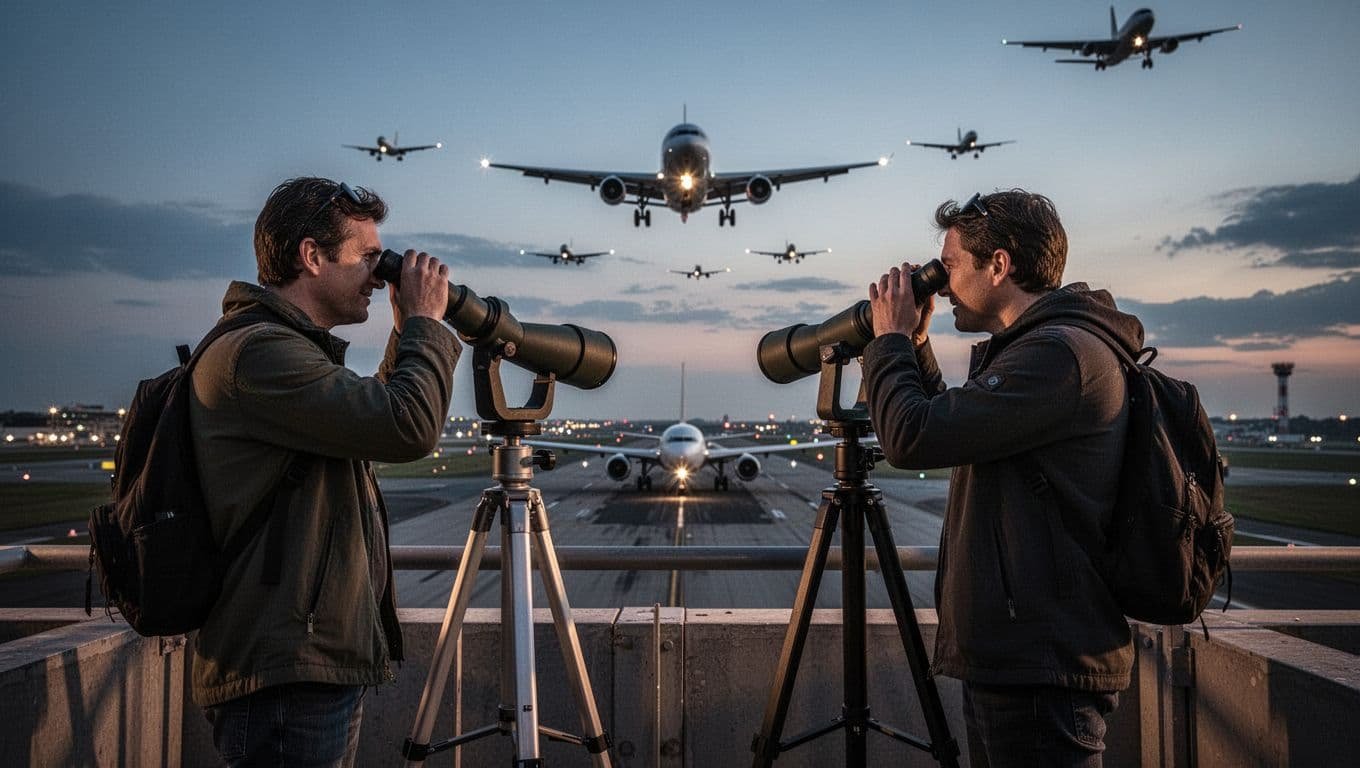
Budget plays a role. Entry-level scopes under $300 handle casual use. Premium ones over $1,000 deliver edge-to-edge clarity. I test close focus for ground crew action too.
Objective lens size and why it matters more than the spec sheet suggests
A bigger objective lens gathers more light, which sounds simple until I’m standing at a fence at 6am in overcast weather trying to read a registration through a 60mm scope versus an 85mm one. The difference is real: the 85mm stays bright and usable well past the point the smaller lens turns muddy. The trade-off is weight and bulk, so if I’m hiking to a remote hillside spot rather than parking next to the fence, I’ll happily give up some brightness for a lighter 65-72mm scope I can actually carry comfortably.
Exit pupil is the number I check before buying anything. Divide the objective lens diameter by the magnification, and anything under about 2.5mm at your typical zoom setting starts to feel dim, especially in the early morning or late afternoon light that tends to produce the most interesting traffic.
For deeper specs on straight versus angled designs, check Digital Camera World’s spotting scope guide. It matches my experiences perfectly.
Top Spotting Scopes I Recommend
I favor scopes that excel in aviation settings. First, the Vortex Razor HD 27-60×85 tops my list. Its glass rivals European brands at half the price. I love the extra-low dispersion elements that kill color fringing on silver fuselages.
The Swarovski ATS 20-60×80 suits pros. Razor-sharp at max zoom, it shrugs off fog on misty mornings. Pair it with their stay-on case for quick setups.
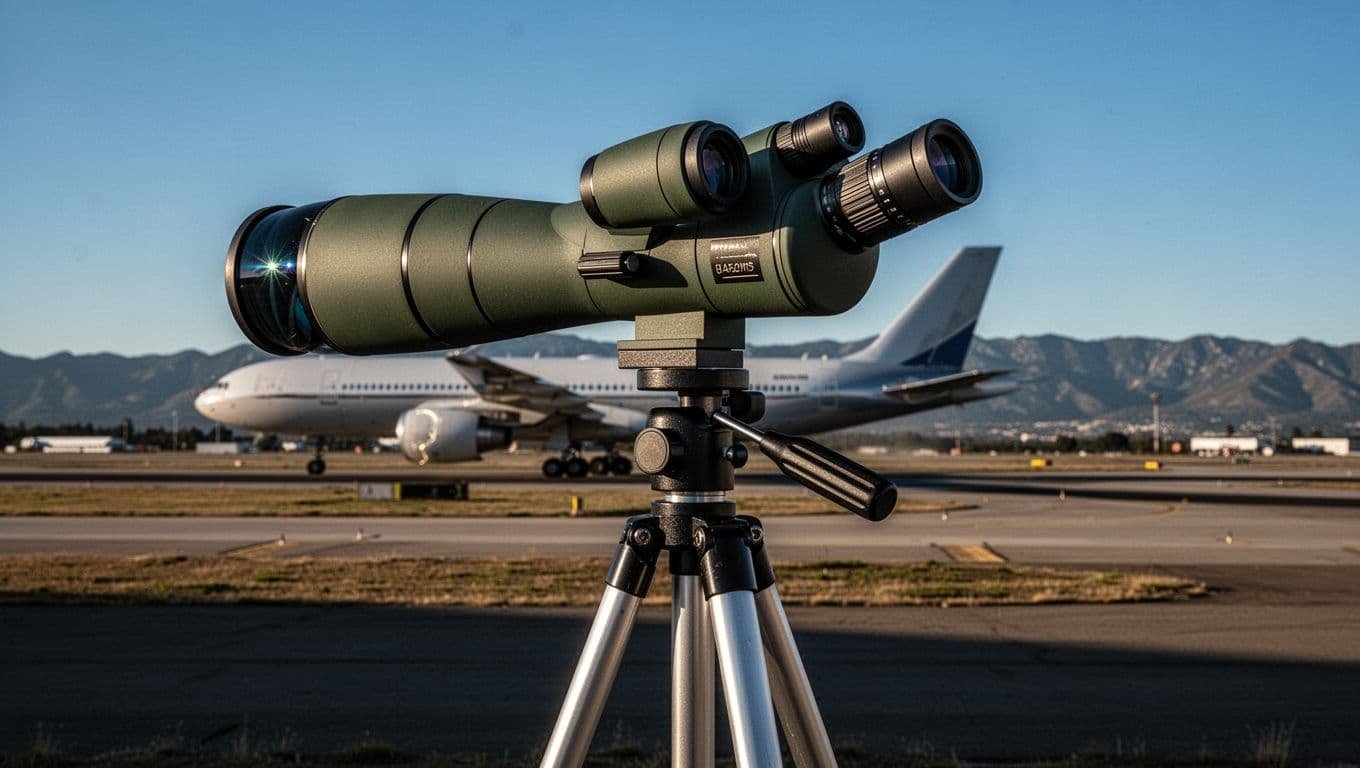
Budget hunters, try the Celestron Regal M2 22-65×80. Bright views punch above its weight. All three handle digiscoping, so I snap frame-filling shots.
Quick comparison of my top picks
| Scope | Zoom / Objective | Best for | Price range |
|---|---|---|---|
| Vortex Razor HD | 27-60x / 85mm | All-round value, strong glass | $1,200-$1,600 |
| Swarovski ATS | 20-60x / 80mm | Pro-level clarity, foggy climates | $3,000+ |
| Celestron Regal M2 | 22-65x / 80mm | Budget-conscious spotters | $500-$700 |
See Outdoor Life’s tested spotting scopes for hands-on results that echo mine. They rate durability high, just like I do.
Enhance Your Views from Plane Spotter Hotels
Nothing beats spotting from a plane spotter hotel. I book rooms with runway sightlines, then set up my scope on the balcony. Dawn departures fill the sky, and the scope pulls in every flap adjustment.
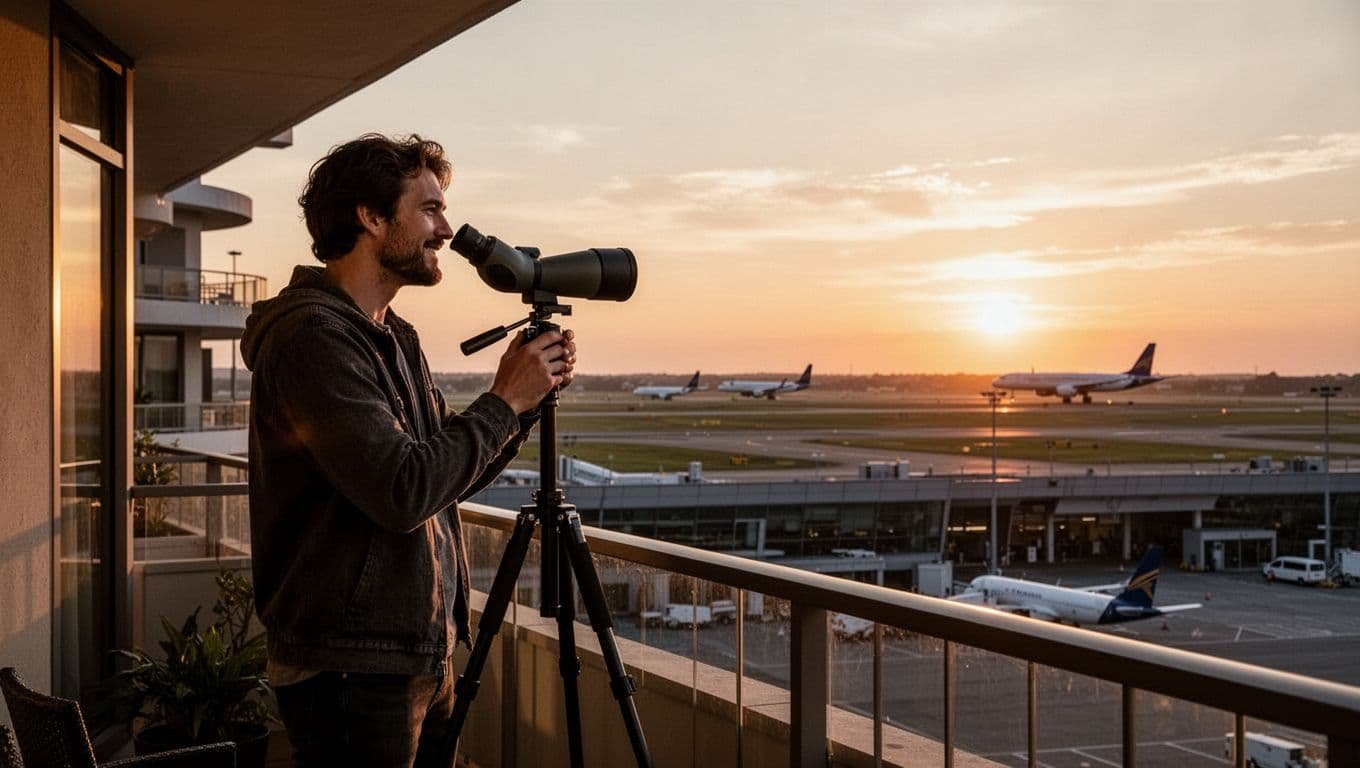
Tripods clamp to rails easily. I angle the scope over glass doors for apron bustle. Hotels like those near LAX or Heathrow offer this perk, turning stays into spotting havens. A comfortable bed recharges me for the next day’s action.
One thing I’ve picked up from repeated hotel sessions: balcony railings are rarely flat, so a tripod with independently adjustable legs is worth the extra cost over a fixed-height model. I also keep a small rubber mat under the tripod feet on tiled balconies — it stops the whole setup creeping toward the edge over a long session.
Common Mistakes Plane Spotters Make with Scopes
I once skipped a tripod and regretted the shaky views. Always stabilize; wind amplifies wobbles. Another slip: ignoring eye relief. Glasses-wearers need 18mm or more to see full fields.
Over-magnifying kills too. At 60x, heat haze warps horizons midday. I dial back to 30x then. Cheap scopes tempt, but they frustrate with mushy images. Invest wisely.
Clean lenses gently. Microfiber cloths beat shirts, which scratch coatings. Store dry to dodge internal fog.
Maintenance that actually extends a scope’s life
I rinse dust off the exterior with a rocket blower before I ever touch a lens cloth to the glass — grit dragged across a coated lens is the single fastest way to put fine scratches in it. Once or twice a season I check the tripod mount screws, since vibration from travel loosens them more than people expect, and a scope that wobbles on its own mount is worse than no tripod at all.
If a scope has been out in salt air near a coastal airport, I wipe down the barrel and focus ring with a barely damp cloth afterward. Salt residue creeps into focus mechanisms over time and turns a smooth knob gritty within a season or two.
Getting Started with Digiscoping
Digiscoping — shooting photos or video through the scope’s eyepiece — is where a lot of my favorite shots come from, especially registration close-ups I could never get with a standard camera lens without spending thousands on super-telephoto glass. A universal phone adapter clamps over the eyepiece and lines up the phone’s camera with the scope’s optical path. It takes some fiddling the first few times to get the alignment right and avoid vignetting (the dark ring around the edge of the frame), but once it’s dialed in it stays consistent between sessions.
A few things make digiscoping easier: locking the phone’s exposure and focus manually rather than letting it hunt every time a plane moves through frame, using burst mode so I’m not relying on perfect timing for a single shot, and bracing the whole rig against the tripod head rather than my hands, since any shake gets magnified along with the image. I’ve had far better luck shooting stationary aircraft or planes on long final approach than trying to track something moving fast across the frame — that’s still a job better suited to a dedicated camera with a long lens.
Wrapping Up Spotting Scope Essentials
Spotting scopes transform my plane watching. I pick stable, bright models for runways near plane spotter hotels. Start with quality glass and a solid tripod.
Grab one today and chase those rare visitors. Which scope fits your next trip? Share in the comments.
FAQ
What magnification works best for plane spotting?
I use 20-60x. It captures high-altitude traffic without dimming.
Are angled or straight spotting scopes better for aviation?
Straight for quick tracking; angled for comfort over hours. I mix both depending on the spot.
Can spotting scopes handle digiscoping?
Yes, most premium ones do. I attach a phone adapter for easy shares.
How do I protect my scope from airport weather?
Choose waterproof models. I add a rain cover for sudden showers and pack silica gel packets in the case to fight condensation.
What’s a good beginner spotting scope under $500?
The Vortex Diamondback suits new spotters well. Clear and tough, and forgiving if it takes a knock or two while you’re still learning to handle it.
Do I need a spotting scope if I already own binoculars?
Not always. If most of my spotting happens on the move, binoculars alone cover it. A scope earns its keep once I’m settling into one fixed spot for hours, especially at a hotel balcony or a distant fence line where extra reach matters most.
Pingback: Best Sydney Airport Hotels: Runway & Airport Views